
Trip Info
-
Feb-May:Sep-Dec
-
Strenuous/very tough
-
5-7 Hours
-
6560m
-
English, Deutsch, French, Chinese
-
Kathmandu
OverView
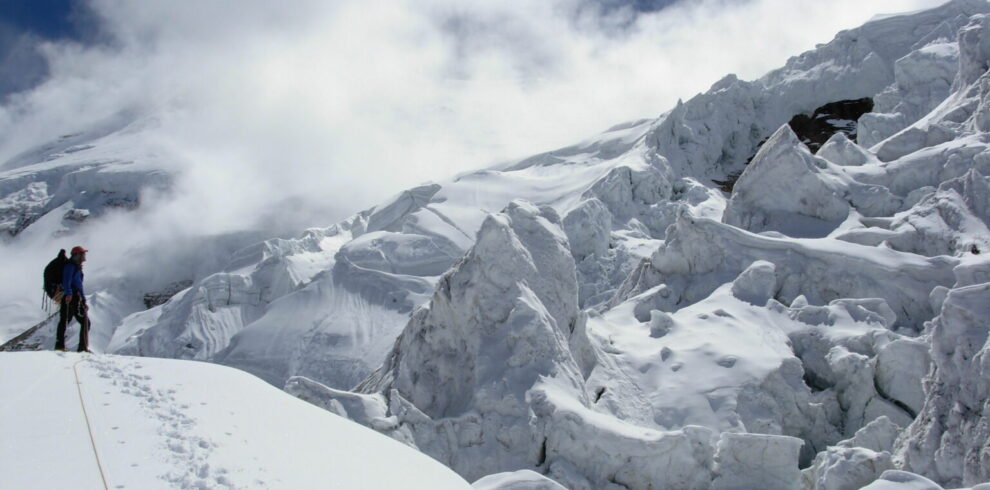
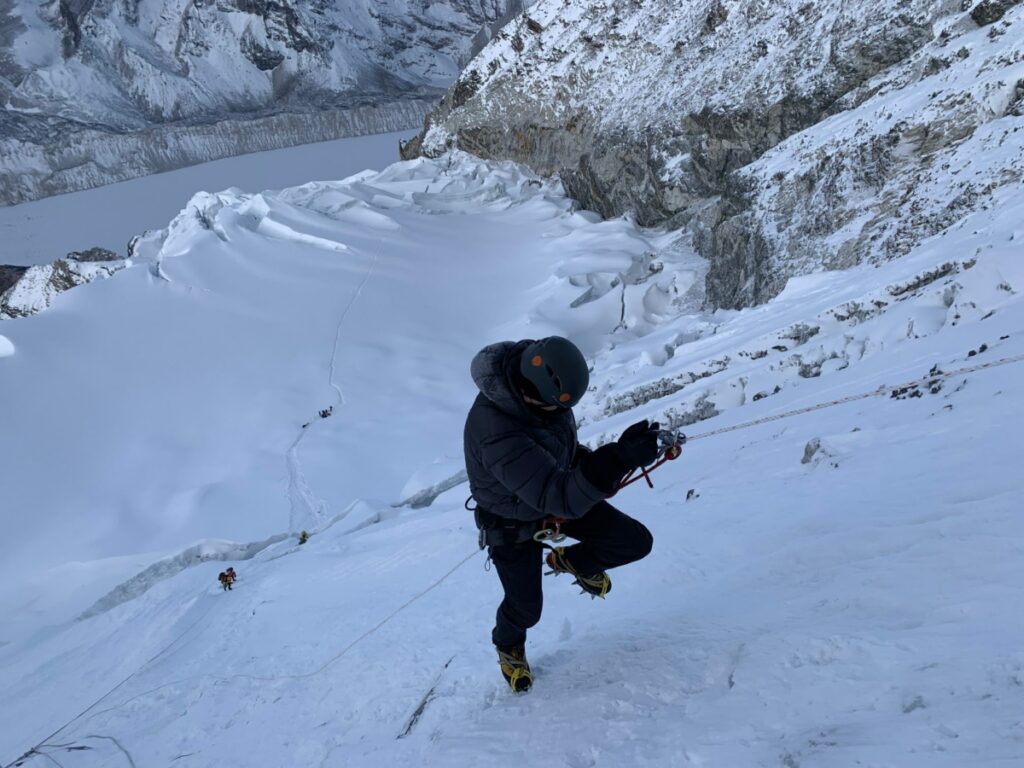
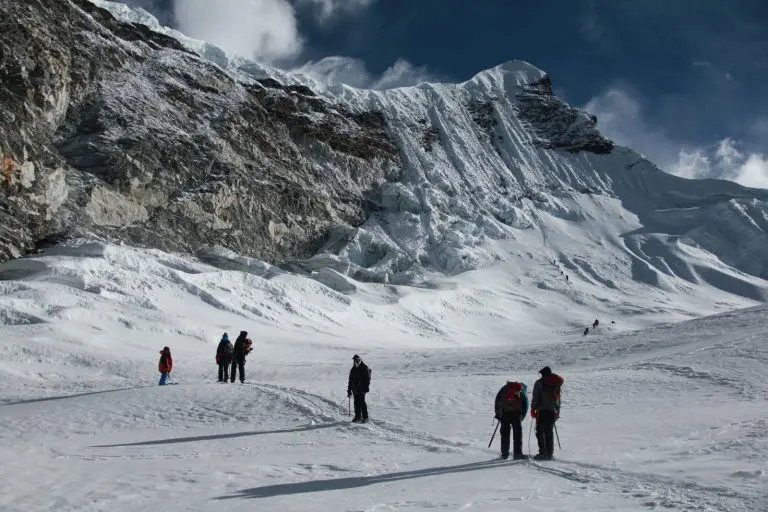
Imja Tse peak or also popularly known as Island Peak stands tall with a modest height of 6,189m. English Mountaineer Eric Shipton named it an Island Peak in 1953. He thought it resembles an island in a sea of ice seeing it from Dingboche. In 1983, Island Peak again got its new name, Imja Tse. Island peak climbing is done along with the Everest Base Camp Trek. With very few technical aspects, it offers itself even to beginner climbers with competitive endurance. Hence, it is one of the most popular choices among the 6000m. Island Peak welcomes hundreds of climbers groups each year luring them to their peak. The trip begins after landing at Lukla airport. Spending a couple of nights in Namche Bazaar the climbers acquaint themselves gradually before actually climbing the Island Peak. It takes four to five days to reach the Base camp of Island Peak. Here in the base camp climbers have to familiarize themself with the climatic condition before actually pushing themselves to the summit. The ascent to the top starts along a ridge where climbers use a foot traction device popularly known as crampons along with a rope to elevate upwards. The way across the glacier is easy with occasional fractures in them. After reaching the top, an exquisite view of Lhotse Shar, Makalu, Baruntse, and Ama Dablam is seen. This peak was first ascended by Tenzing Norgay who was a part of the British Team preparing for the Everest Triumph. After reaching the summit, you descend via the main Everest Trail to Lukla Airport
Itinerary
Upon your arrival the Tribhuvan International airport (TIA) in Kathmandu, you will be greeted by a representative from Nepal Wanders who will take you to our hotel. In the evening, there will be a welcome dinner in a traditional Nepali cuisine restaurant where you will be able to enjoy authentic Nepali meal with a brief cultural program. Overnight at hotel in Kathmandu
After breakfast, we take an early morning flight to Lukla. After flying above the breathtaking green and white mountains, we reach Tenzing-Hillary Airport at Lukla. This is one of the most beautiful air routes in the world culminating in a landing on a hillside surrounded by high mountains. Upon our arrival at Lukla, we meet the rest of our crew members. Next, we begin our trek through the prosperous village of Lukla to Phakding. To assist in acclimatization, we only have a short hike today. However, if interested in additional activities, we can take a side trip to a nearby monastery. Overnight in Phakding.
After breakfast we walk through beautiful pine forests and then along Dudh Koshi River ending our nature-filled journey at Namche Bazaar. After walking for almost over an hour, we come across the glistening Mt. Thamserku (6,608m) on our right and also experience the serenity of pine, fir and juniper forests throughout our journey. If the weather is clear, we may even catch a glimpse of Mt. Everest peering over the Lhotse-Nuptse ridge. We continue walking until we reach the entrance to Sagarmatha National Park, Namche Bazaar, the gateway to Mt. Everest and main trading centre of this region. This day we cross five suspension bridges, the last one also known as the Hillary Bridge being the highest. It is an uphill walk from Hillary Bridge to Namche Bazaar. Overnight in Namche Bazaar.
Today is set aside for acclimatization. Health experts recommend that instead of being idle we stay active and move around even during the rest day. We can either stroll around Namche’s quaint villages and get acquainted with the Sherpas and their rich culture, or we can hike up to the Everest View Hotel and enjoy an up-close view of the mighty Everest. While in the Namche village or upon returning from the hike to the Everest View Hotel, trekkers may also visit the local museum containing exhibits displaying the area’s native flora and fauna as well as the history of the Mount Everest region.
For trekkers who want to hike for a little longer, a hike to Khumjung village (5-6 hours) may also be an option. In the village we can visit the Edmund Hillary School and Khumjung Monastery (a monastery famous for housing the head of the Yeti!). Overnight in Namche Bazaar.
After breakfast, we trek towards Tengboche. It is an easy walk from Namche to Phunki. Upon reaching Phunki, we ascend towards Tengboche, a village that houses the very famous Tengboche monastery which is the largest monastery of the Everest region. Located amidst the Sagarmatha National Park (a UNESCO World Heritage Site of “outstanding universal value”), it is draped with the panoramic 360-degree view of the Himalayas, including Mt. Everest, Nuptse, Lhotse, Ama Dablam and Thamserku and is also the biggest monastery in the Khumbu region. We visit the monastery the same day at around 3 p.m. to witness a religious ceremony. Overnight in Tengboche.
With the Himalayas as its backdrop, the monastery in Tengboche is in a perfect location to enjoy the beautiful Himalayan landscape. We visit the monastery in the morning and take pictures of the amazing landscape. Then we begin our trek by walking through lush forests of birch, conifers and rhododendrons on an easy path. This picturesque trail then dips down to Debuche, crossing the Imja River before climbing up to Pangboche (We can either walk in the upper or lower Pangboche trails). We are most likely to choose the upper Pangboche trails as it provides more pristine view of the Himalayas. We also visit the Pangboche monastery. From here onwards, the walk is fairly moderate as we enter the Imja Valley. The valley gradually unfolds as we approach the confluence of the Lobuche River. We descend into the river and begin the climb up to Dingboche. On arrival at Dingboche, we are greeted by a beautiful array of fields enclosed by stone walls to protect barley, buckwheat and potatoes from the cold wind and grazing animals. Overnight in Dingboche.
To ensure the body rests and acclimatize properly, we have separated an extra day at Dingboche for a proper acclimatization process. Today, we rest for adaptation at Dingboche. You may have a full day of rest, or there are some places where you can hike for a day up to the Nagarjuna Peak (5,050 m), which provides breathtaking views of High Mountain, including Towering Mt. Lhotse, Amadablam, Mt. Makalu, Imja Tse Peak, and many more peaks nearby.
Dingboche is a summer settlement and here the great peaks of Ama Dablam, the ridge of Nuptse-Lhotse, Tawache and Chalotse surround us. We begin today’s trek to Chhukung by walking through stone-walled fields, Imja Khola valley before walking in glacier moraines. On our walk, we will be surrounded by Lhotse and Ama Dablam mountains. Later, beyond Bibre village we see Island Peak soaring above us. The trail ahead is intersected by icy streams. We reach Chhukung, a small settlement in about half an hour from Bibre. From here, directly across the valley is the fantastic Ama Dablam and the Amphu Labsa mountains. Overnight in Chhukung.
The trek to Island Peak Base Camp is on a fairly steep trail. First, we climb south then turn east to the main line of the valley. We then walk on a winding path below the southern flank of the moraine from the Lhotse Glacier. Next, we continue walking on a pleasant trail along a streamside. The route to the Amphu Lapcha lies to the southeast. A crisscross route through the Imja and Lhotse glacier moraines leads to a wide valley flanking the SW side of Island Peak. Overnight at Island Peak Base Camp.
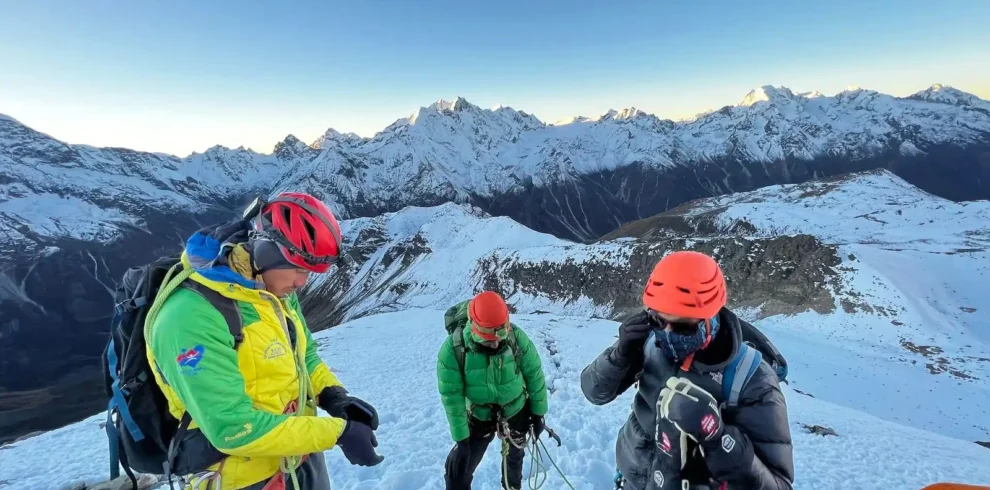
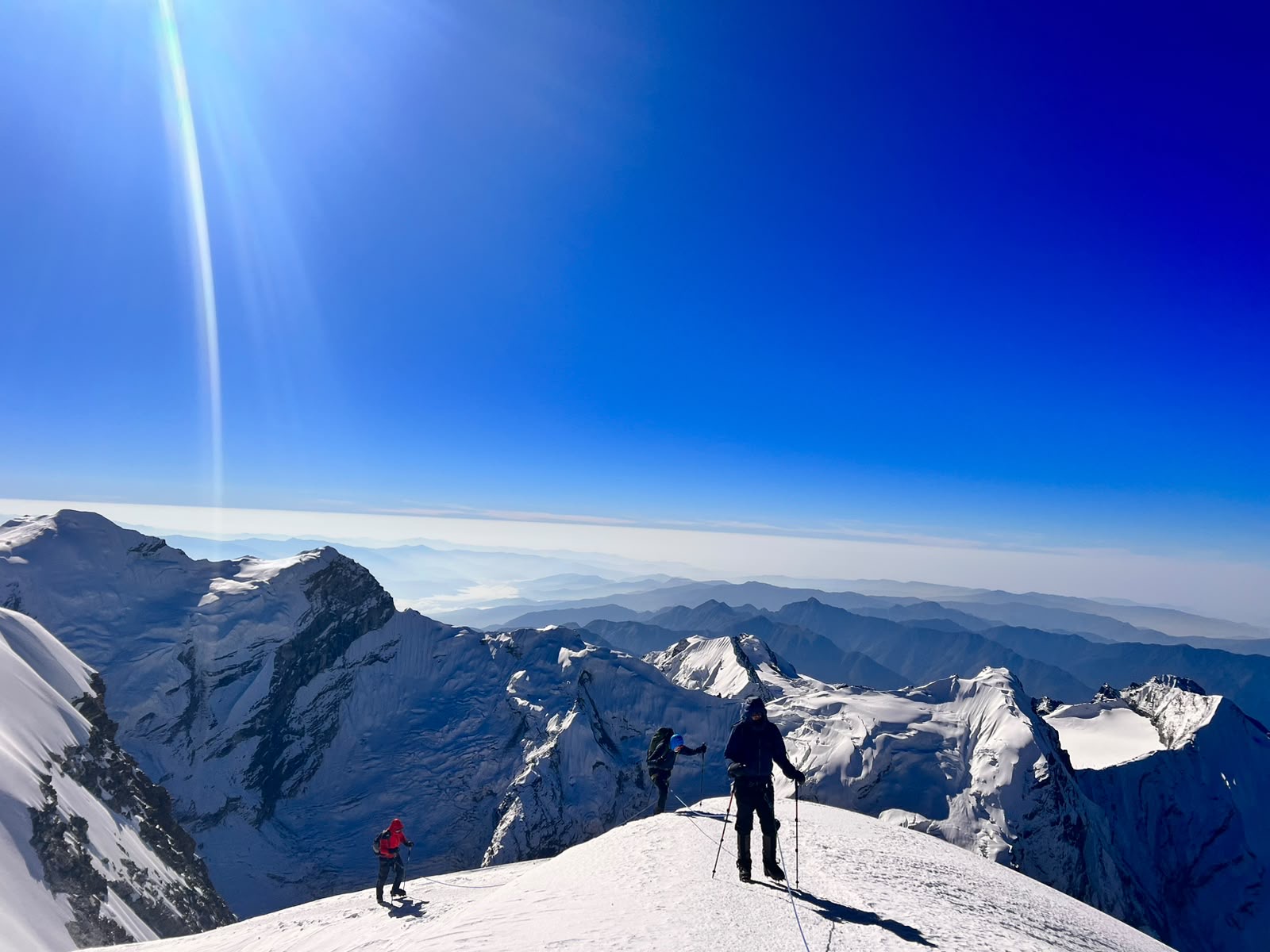
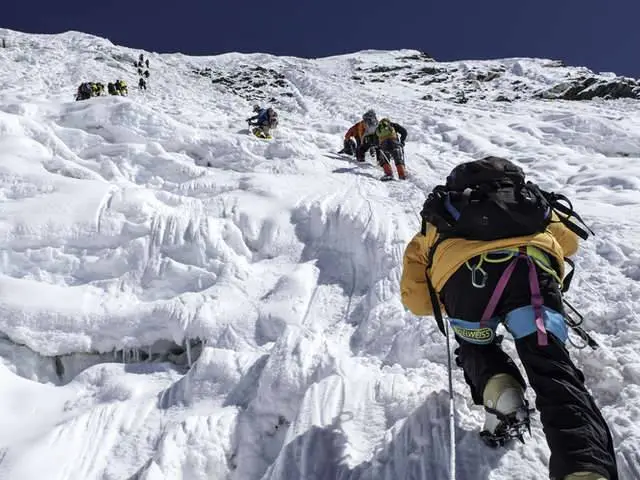
We wake up early today at around 12 to 1 am and have our breakfast before beginning our climb. It is important we reach the summit before noon because in the afternoon the strong winds in the highlands might become a barrier for a successful summit. The trail moves up beyond the base camp for several hundred meters before striking off the steep hillside. Initially sandy, the path soon turns to grass before becoming boulder strewn. As we climb up the hill, we will see that the slope narrows and the trail enters a steep rock channel. We climb the rock gully. This is not difficult, but there are several short rock steps to climb before we emerge on the right side of the gully. The route then follows a ridgeline, which leads to an exhilarating and exposed traverse onto the snout of the summit glacier. The guides will fix a rope when required. A steep snow slope leads us onto the summit ridge. Both fixed rope and man rope will be used during the climb for safety. We use fix rope after successfully climbing on rock. The length of the rope will usually be of 350m. However, the length depends on the time of the season and the crevasses
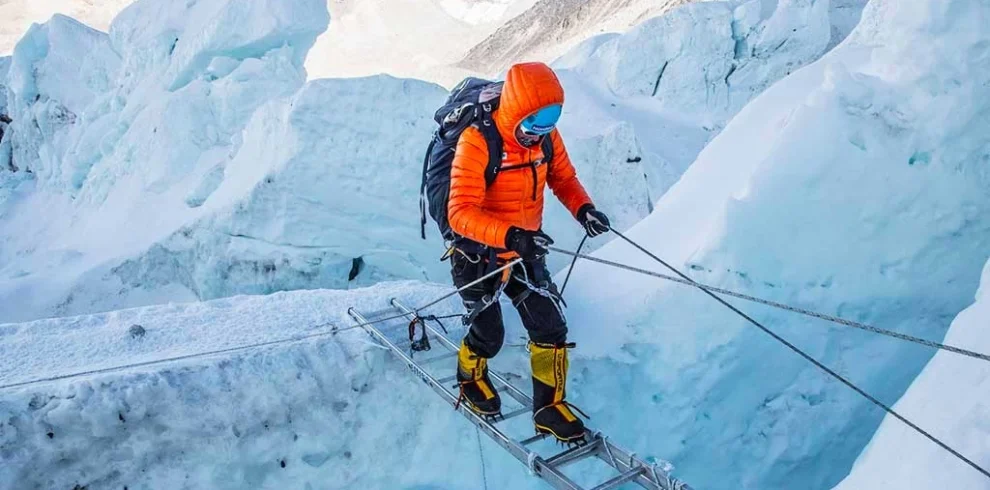
There are two newly formed crevasses which are approximately 3 and 4 meters long. We will be using ladders to cross them. After enjoying the summit views, and taking pictures, we descend all the way to Island Peak Base Camp where some of our crew is waiting for us. We celebrate on our successful Island Peak climb.
Today’s walk will be a much easier as we descend to the lower altitudes. Following the same route back through the wide valley of Khumbu Khola, we pass through the beautiful Sherpa villages Orsho and Shomare till we reach Pangboche. Pangboche is a scenic village surrounded by Everest to its north, Ama Dablam, Thamserku, and Kangtaiga to the east, the Kongde range to the south and the Imja Tse River flowing through the wide fertile valley. From Pangboche we retrace our steps down to the Imja Khola and up through the forest to Tengboche. After lunch at Tengboche, we continue through the hillside blanketed by rhododendron and juniper trees. We keep a lookout for wildlife such as mountain goats, snow leopards, colorful pheasants, etc., while passing through the forest. After passing a chorten, we reach the army camp at Namche Bazaar. Overnight in Namche Bazaar.
The trail descends steeply downward so we need to walk cautiously as our shaky legs continuously battle the rocky terrain. After crossing the suspension bridges over the fast flowing Dudh Koshi and its tributaries, the trail becomes more level and natural. After our arrival in Lukla, we stretch those sore legs and recall the experiences of the last couple of weeks. Overnight in Lukla.
We catch an early morning flight to Kathmandu after our long mountain journey. After reaching Kathmandu, we can take a rest or do some souvenir shopping. If we want to explore any other areas of Kathmandu, we may do that today. Our guides can help you with both souvenirs shopping or sightseeing. There will be a farewell dinner in the evening to celebrate the climbers’ successful summit of the Island peak. Overnight in Kathmandu.
Our representative will pick you up at the hotel and transfer you to international airport for onward journey.
Includes/Excludes
Cost Includes
- Meals: 10 breakfasts, 8 lunches ,9 dinners
- Transport: Comfortable van with A/C, One way flight to Pokhara
- Accommodation: Kathmandu (3 nights), Tea house (no facilities) (11 night), Pokhara (1 night)
- PERMITS : Expedition Royalty and a permit fee of Nepal Mountaineering Association (NMA) to climb Island Peak, Sagarmatha National Park, and Pasang Lhamu Rural Municipality entry permit and fee.
- GARBAGE MANAGEMENT : Stool Shipment Transfer & Garbage Deposit fees.
- INSURANCE : Medical & Emergency rescue Insurance for all involved Nepalese staff during the trek and expedition.
- MAP : Trekking and climbing map.
- DUFFLE BAG : One Nepal Wanders Treks’ Duffle Bag.
- MEMBER TRANSPORTATION : (Domestic Flight) Fly from Kathmandu – Lukla and while returning Lukla - Kathmandu, as per itinerary.
- EXPEDITION STUFFS TRANSPORTATION : All necessary expedition equipment transportation for all Members and Staff from Kathmandu to Lukla (by air cargo) and Base camp (by Porters / Yak) – While returning: Base camp to Lukla (by porters / Yak) and Lukla to Kathmandu (by air cargo).
- MEMBER LUGGAGE : Up to 25 Kg per member as personal baggage during the trek to be carried by porters.
- FOOD AND LODGING : 3 meals a day (breakfast, lunch, and dinner; including tea and coffee) along with accessible accommodation at Hotel/Lodge/Tent during the trek and at the Basecamp.
- DRINKING : Per day 2 Liters of boiled water per member to carry on the thermos.
- PORTER : Porters per member up to the Base camp and from the Basecamp (both ways).
- HIGH ALTITUDE CLIMBING SHERPA : 1 veteran and government-licensed climbing Sherpa per member (1 Member: 1 Sherpa), during the entire climb from Basecamp to the summit and back.
- ASSISTANCE : Climbing Sherpa to assist in carrying your gear to the high camps.
- CLIMBING SHERPA SALARY & ALLOWANCE : Climbing Sherpa’s Salary, Equipment, Food, and Clothing.
- OXYGEN BOTTLE (O2) : Oxygen bottles will be in stock at base camp in case of an emergency (with an appropriate charge).
- OXYGEN MASK & REGULATOR : 1 Set of Oxygen masks will be in base camp in case of an emergency.
- HIGH CAMP SERVICE (INFRASTRUCTURE AND LOGISTICS) : High Altitude Tent, Lights, Necessary cooking EPI gas, cooking pot, High food for a member, Sherpa, and other crews. Group climbing gears, fixed and dynamic rope during the climbing period as required.
- HIGH ALTITUDE TENT : Members will share tents in high camps (2 members: 1 tent).
- WEATHER FORECAST : Weather forecast report during the entire expedition.
- GUIDE : Local government licensed Guide (English speaking) during the trek and sightseeing in Kathmandu valley.
- VALLEY SIGHTSEEING : Sightseeing in Kathmandu Valley [Swoyambu (Monkey temple) and Kathmandu Durbar Square] by a professional guide.
- MEDICAL KIT : Comprehensive Medical kit for members and staff.
- CERTIFICATE : Island Peak climbing certificate issued by NMA (after climbing Island peak successfully).
Cost Excludes
- AIR FARE : International flight airfare (from and to Kathmandu).
- NEPAL ENTRY VISA FEE : Nepalese Visa fee is $50 USD for 30 Days.
- LUNCH & DINNER : Lunch & dinner during the stay in Kathmandu (also in case of early return from Trekking / Expedition than the scheduled itinerary).
- EXTRA NIGHTS IN KATHMANDU : Extra nights’ accommodation in Kathmandu. In case of early arrival or late departure, early return from Trekking / Expedition, domestic flight cancellation (due to any other reason) than the scheduled itinerary.
- INSURANCE POLICY : Insurance covering both medical and high-altitude evacuation costs (for the trip cancellation, interruption, high altitude rescue & air evacuation, medical treatment, repatriation, etc.) *Mandatory
- PERSONAL EXPENSES : Telephone Calls, Internet, Toiletries, battery recharge, hot shower, laundry, soft drinks, beers, and any Alcoholic beverages (during the trek and in Kathmandu but we will have soft drinks for members at base camp).
- PERSONAL CLIMBING EQUIPMENT : Clothing, Packing Items, Bags, Personal Medical Kit, and all kinds of Personal Trekking / Climbing Gear.
- TOILETRIES : Soaps, shampoos, toilet and tissue papers, toothpaste, and other items used to keep yourself clean.
- FILMING : Special Filming, Camera, and Drone permit fee.
- INTERNET SERVICE : Not included during the trek and the expedition.
- SUMMIT BONUS : Summit bonus for climbing Sherpa - Minimum 300 USD.
- TIPS : Calculate some tips for the high camp and other staff– Minimum 100 USD.
- EXTRA : Any other services or activities, which are not mentioned in the itinerary and other items not listed in the “Cost Includes” section
Embark on an exhilarating trekking journey that immerses you
It is a long established fact that a reader will be distracted by the readable content of a page when looking at its layout. The point of using Lorem Ipsum is that it has a more-or-less normal distribution of letters, as opposed to using ‘Content here, content here’, making it look like readable English. Many desktop publishing packages and web page editors now use Lorem Ipsum as their default model text, and a search for ‘lorem ipsum’ will uncover many web sites still in their infancy. Various versions have evolved over the years, sometimes by accident, sometimes on purpose (injected humour and the like).
Frequently Asked Questions
The best seasons for Island Peak climbing are autumn (September to November) and spring (March to May), when skies are clear and temperatures are relatively stable for summit pushes. Autumn offers crisp, stable weather following the monsoon, while spring brings milder temperatures and blooming rhododendron forests along the approach trek.
Winter climbs are possible for experienced climbers seeking fewer crowds, though summit conditions are considerably colder and windier.
Island Peak (6,189m / 20,305ft) is rated a moderate trekking peak – no advanced mountaineering experience is required, but climbers should be in strong physical condition and comfortable with basic use of crampons, ice axes, and fixed ropes. The route involves glacier travel and a steep final headwall near the summit ridge, where our climbing guides provide hands-on training at base camp before the summit push.
Proper acclimatization is the single most important factor for a safe Island Peak climb, and our itinerary includes dedicated rest and acclimatization days in Namche Bazaar and Dingboche before pushing higher. Climbers should stay well hydrated, ascend gradually, and report any AMS symptoms headache, nausea, dizziness to their guide immediately. Our climbing leaders are trained in altitude-related emergency response and carry appropriate first-aid and oxygen provisions throughout the expedition.
Climbers need basic proficiency with crampons, an ice axe, a climbing harness, and ascending/descending fixed ropes, all of which our guides demonstrate and practice with you at base camp before the summit attempt. The route involves a glacier crossing, occasional crevasse sections requiring ladder crossings, and a final steep ice/snow headwall to the summit ridge. Technical climbing gear is provided as part of the package, please pack warm layered clothing suited to temperatures well below freezing at high camp.
Every Island Peak Expedition includes experienced climbing guides, a dedicated Sherpa support team, and porters to carry group and individual climbing equipment, ensuring a low climber-to-guide ratio for safety on technical sections. Our guides are trained in high-altitude rescue and wilderness first aid, and our Kathmandu-based support team monitors each expedition throughout the trip. This level of on-the-ground support has helped maintain Nepal Wanders strong track record since 2005
Island Peak is technically known to be a ‘trekking peak’, but when it comes to packing, a lot more stuff is required than what you can expect from a regular trek. The right types of equipment and gears play a crucial role to successfully attempt the Island Peak climb. We recommend the following gears and kits for Island Peak climbing:
- Hiking boots
- Climbing boots
- Back pack (daypack)
- Sleeping bag
- Head torch
- Water & wind proof jacket
- Shirts and t-shirts
- Thermal base layers
- Sun hat & sun glasses
- Gloves
- Thermal bottoms
- Socks
- Trekking trousers
- Water & wind proof trouser
- Water bottles
- Sun cream & lip balm
- Personal toiletries
- Gaiters
- Trekking poles
- Scarf & warm hat
First and foremost, your fitness level, food and hygiene, regular exercise and workouts, immunity and your entire preparation for the trip affects how altitude sickness will respond to you. In fact, the prevention of altitude sickness starts right from the very day that you start planning your trip. Other factors that lower the chances of getting the sickness are your climbing leader’s knowledge, skills and experience, duration of the trip, and sufficient acclimatization. Reaching the top without any trouble related to altitude sickness, you should keep a few tips from our experienced leaders and travel consultants in mind, namely:
- Slow ascend with proper rest and sufficient acclimatization
- Stay hydrated by drinking plenty of water and other fluids
- Eat enough balanced food and sleep well on the trip
- Avoid alcohol, cigarettes or tobacco during the entire trip
- Be head-strong and mentally prepared
- Train your body sufficiently with uphill hikes or cardiovascular and gym workouts 3 months before your trip
Through immediate or long-term acclimatization, the human body can adapt to high altitudes. The main problem that can arise at high altitude is the Acute Mountain Sickness (AMS) and the symptoms vary from one person to another. When it comes to trekking and climbing in the Himalayas, altitude sickness has always been a major concern. Exposure to higher elevations means the lack of enough oxygen and more dry air in the atmosphere. This exposure causes increase in your metabolism while suppressing your appetite, vomiting, headache, nausea, lethargy, dizziness, cough, disturbed sleep, pneumonia, and hyperthermia. These symptoms are more prevalent in climbers who rush quickly to elevations above 2,500m (8,202ft.). However, it is not the same for people residing in locations at high altitudes as they are used to these elevations all through their lives. Nepal Wanders has a great team of climbing leaders and crew members to ensure your safety and well-being. We suggest you to always listen to your leader and follow his instructions and always tell him if you are not feeling well on the way.
All climbing members including guides and porters will walk together in a group so there is no chance of a climber or a crew member getting lost or left behind. However, when there is an emergency and you need to communicate with the office or a family member from a no coverage area, then satellite phone is the only and best mode of communication. Nepal Wanders is prepared with all kinds of communications including mobile and satellite phones so that we can always remain connected with our climbers and crew members. High up in the mountains, cell phones don’t always work so for emergency communications, we make use of a satellite phone that is with the climbing leader.
Drinking water issues have really been chronic in the entire country since a long time. The sources of drinking water in the mountains are river or stream water but we do not recommend these to our clients as far as possible. The water may be highly contaminated causing various illnesses during your journey. While trekking up to the base camp, drinking water will be available in the teahouses, either from taps, boiled water or bottled water. We also suggest for the use of steriPEN or other water purifying agents. During the peak climbing time, water is not available so it needs to be carried all the way up to the top. For our customers, we will provide bottled water or boiled and sterilized water to refill in the water bottles or water bladders.
On average, you walk about 4 to 6 hours per day. One or two days can be as less as 3hrs and one or two days can be as long as 7hrs.
Island Peak, also known as Imja Tse, stands at 6,189m / 20,305ft in the Khumbu region of Nepal’s Everest National Park, just south of Everest Base Camp. Its distinctive name comes from its appearance as an “island” rising from a sea of ice when viewed from Dingboche. The summit offers unobstructed panoramic views of Everest, Lhotse, Nuptse, and Ama Dablam.
Yes, an Island Peak climbing permit issued by the Nepal Mountaineering Association (NMA) is required, currently costing USD 350 per climber in spring and autumn (groups of 1-4) or USD 175 in winter and monsoon, alongside a Sagarmatha National Park entry permit.
Both permits are arranged by our team as part of your expedition package, so you won’t need to handle NMA paperwork directly.
The Island Peak Expedition duration is typically 16 days from Kathmandu and back, covering the scenic flight to Lukla, the trek through the Khumbu Valley, several acclimatization days, the summit push, and the return flight from Lukla to Kathmandu.
This itinerary can be extended for travelers wanting extra acclimatization days or combining the climb with a longer Everest region journey, such as the Everest Base Camp Trek.
Yes, combining Island Peak with the Everest Base Camp Trek is one of the most popular ways to climb, since the EBC route naturally builds the altitude acclimatization needed before the technical summit push. Climbers typically trek to Everest Base Camp and Kala Patthar first, then continue on to Chhukung and Island Peak Base Camp for the climbing phase.
This combined itinerary lets you experience two of the Khumbu’s signature achievements, the classic EBC trek and a genuine 6,000m/19,685ft summit in a single expedition.
Please contact us if you want it to be combined.
Island Peak has a high summit success rate, generally cited around 85-90%, for climbers who follow a proper acclimatization schedule and climb with experienced guides. Success rates drop significantly for climbers who skip acclimatization days or attempt the peak without a Khumbu experienced guide. Our itineraries build in dedicated acclimatization days and a low guide-to-climber ratio to keep success rates and safety high.
Island Peak and Mera peak are both popular introductory climbing peaks in Nepal, but Island Peak (6,189m / 20,305ft) involves more technical glacier travel and a steeper summit headwall, while Mera Peak (6,476m / 21,247ft) is higher but technically more straightforward, mostly a snow trek with less ice climbing. Island Peak is often preferred by climbers who want a taste of genuine mountaineering technique, while Mera Peak suits those prioritizing altitude over technical difficulty. Many climbers use one as preparation before attempting the other on a future trip.
While on your trek, you will stay in the lodges, teahouses or hotels till Chhukung. From Chhukung to Island Peak base camp and until you finish your climb, you will stay in camping tents. You will have guest tents, dining tents, toilet tents, and kitchen tents fixed during the expedition.
Bringing out typical tastes of peak climbing in Nepal, both Island Peak and Mera Peak have their own set of peculiarities. There are some significant differences in the climbing aspects of Mera Peak vs Island Peak Climbing. Mera Peak is slightly higher than Island Peak while Island Peak, with more steep ice climbs, is considered a little more technical than Mera Peak. Mera Peak is high but has very few challenges like crevasses while Island Peak has numerous challenging sections and the headwall, the narrow ridge to the top and several icefalls make it rather difficult. Mera can be climbed without proper mountaineering skills while climbing Island Peak demands basic mountaineering as well as some technical knowledge. The rocky ridge, glacial walk, tapering summit, and ice walls make Island Peak climbing more susceptible to altitude sickness. In the final say, the climbing section at Island Peak is harder than that of Mera Peak. But, the trekking section up to the base camp of Mera Peak is harder than that of Island Peak. Also, the trail to Island Peak Base Camp is much more crowded that the trail to Mera Peak Base Camp.
Different agencies have their own group sizes for trekking as well as for peak climbing trips. Nepal Wanders always considers a small group adventure. Moreover, we are specialized for customized and tailor-made trips. Although 8 to 10 people are the right group size for effective costing factors, we do not stick to this rule. Even if we have a solo traveler who is unable to join a group due to any reason, we will make arrangements for his climb.
Yes, having travel insurance with specific high-altitude mountaineering coverage is strictly mandatory for a Island Peak expedition.
The insurance should cover:
- High-Altitude coverage: It must explicitly cover you for the summit altitude of 6189 meters
- Helicopter evacuation
- Medical and Repatriation: Covers costs for any medical treatment needed during or after the expedition and repatriation to your home country